Melt-Proof Your Haul: The Real Reason Your Tokyo Candy Arrives as Pudding
There's a special kind of heartbreak that happens somewhere between Tokyo and your front porch in July. You order a box of Koala's March, a few packs of Hi-Chew, that limited-edition Kit-Kat you've been hunting for months. Three days later, the box arrives warm to the touch. You open it like a crime scene investigator. The chocolate has fused into one glossy blob. The gummies have merged into a single grape-colored super-organism. The Kit-Kat? It's fine, actually — but you wouldn't know that from the panic you felt peeling back the tape.
We talked to importers, checked the melting points, and built the guide we wish every first-time candy shopper got before hitting checkout in June.
What Actually Happens in a Hot Delivery Truck
Here's the uncomfortable truth: your candy doesn't need to hit 90°F to melt. It just needs to sit above its own softening point for long enough — and the inside of a delivery truck parked on an Arizona tarmac can easily hit 130°F.
Chocolate is the drama queen of the candy world. Cocoa butter, its structural backbone, starts softening around 85–90°F. What you get isn't technically melted-then-rehardened candy; it's bloomed candy — that chalky, streaky, grayish coating that looks ruined even though it's still safe to eat. The texture snaps differently, the mouthfeel goes waxy, and your Instagram unboxing photo is never going to recover.
Gummies and jellies fail differently. Instead of melting, they flow. Pectin and gelatin soften gradually, which is why a bag of grape gummies becomes one grape gummy. It's not dangerous. It's just deeply sad.
Hard candy and pressed tablets barely blink. Which is exactly why your Konpeitō survived the trip while everything around it didn't.
The Heat-Resistance Cheat Sheet
Save this one. It's the difference between a successful haul and a science experiment.
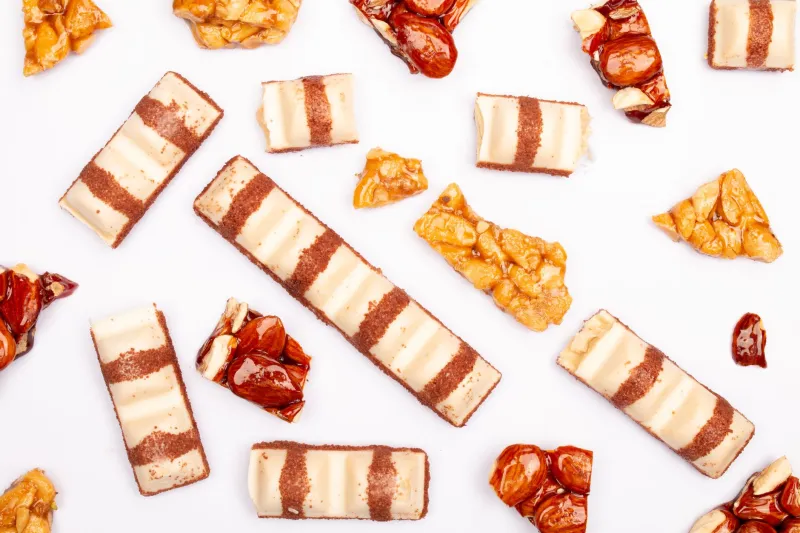
Practically indestructible (ship anytime): Konpeitō, hard lemon candies, Ramune tablets, most wafer-based treats like Apollo strawberries (though the chocolate tip can soften), rice crackers and savory snacks, individually wrapped taffy-style chews at the stiffer end like certain Puccho varieties.
Moderately tough (ship with care above 80°F): Hi-Chew and other chewy candies (they get sticky, not soupy), Pocky and Toppo (the biscuit holds, the coating can smear), gummies in cooler months or with ice packs.
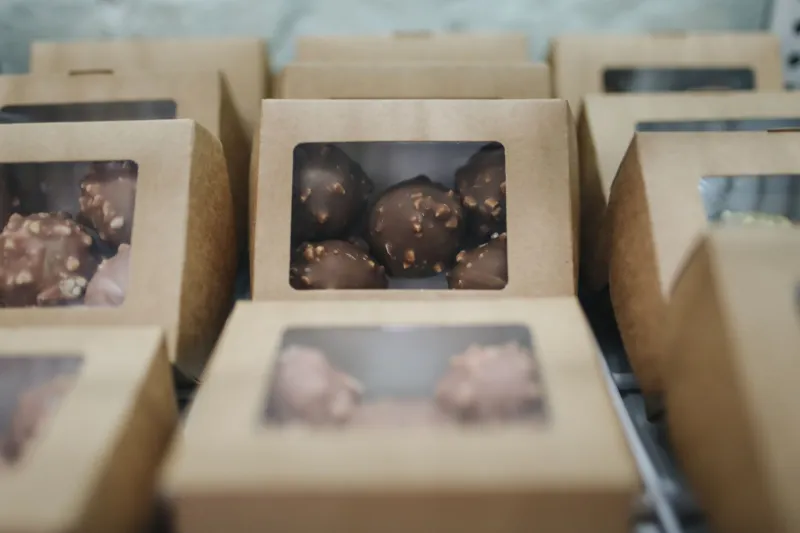
Handle with extreme caution (basically a summer no-fly zone): Chocolate bars of any kind, Meltykiss (the name is a warning), chocolate-covered everything, soft mochi-adjacent sweets, anything labeled 'spring limited' with a cream filling.
One importer we spoke to has a simple rule: "If it would melt in your car's cupholder, it will melt in a truck. Order it in January or don't order it."
Packing Tips From People Who Do This for a Living
The pros don't leave survival to chance. Here's what they actually do:
Insulate, don't just pad. Bubble wrap cushions, but a reflective foil liner or even a layer of insulated grocery bags inside the box slows heat transfer dramatically. Think of it as a tiny sleeping bag for your snacks.
Ice packs are a bridge, not a solution. A frozen gel pack buys you roughly 24–36 hours. On a five-day cross-country shipment, it'll arrive as a warm water bag surrounded by slightly-chilled chocolate. Fine for a 2-day transit; useless for longer.
Choose faster shipping in summer — or don't ship at all. Paying for 2-day delivery in July isn't a splurge; it's insurance. Importers routinely pause chocolate shipments entirely from June through September, switching to hard candy and shelf-stable snacks.
Consolidate the fragile stuff. Chocolate bars shipped loose rattle, soften, and re-harden into new shapes. Wrapping them snugly and keeping them centered in the box — away from the walls where heat hits first — genuinely helps.
The Best (and Worst) Times to Stock Up
If you're building a candy haul, timing is everything. The sweet spot for ordering anything heat-sensitive is October through March — and there's a bonus, because that window overlaps with Japan's autumn and winter limited editions: pumpkin-flavored everything, chestnut chocolates, the legendary strawberry season treats.
Spring is a mixed bag. Sakura season drops gorgeous seasonal confections, but April and May are gamble months depending on your route. By June through September, treat chocolate as officially off the menu unless you're paying for expedited shipping with cold packs — and even then, manage your expectations.
Summer is the time to pivot. Stock up on Konpeitō, hard candies, Ramune, savory snacks, and shelf-stable drink powders. Come October, when the temperature drops and the winter chocolate drops hit Japanese shelves, you can go feral on the Meltykiss.
The Bottom Line
Heat doesn't have to ruin your Japanese candy haul — it just demands a little strategy. Know which candies can take the abuse, pack like your snacks depend on it (they do), and time your big chocolate orders for the cool months. Your future unboxing video will thank you.
And if a summer shipment does go sideways? Honestly, gummy soup over vanilla ice cream is not the worst consolation prize we've ever heard of.