Chew on This: The Secret Science of Why Japanese Candy Feels So Different in Your Mouth
There's a moment that happens to almost every American the first time they bite into a piece of Hi-Chew. It's not quite like a Starburst. It's not gummy. It's not taffy. It's something else entirely — a soft, yielding resistance that breaks down in slow, satisfying waves, releasing fruit flavor in a way that feels almost engineered. Spoiler: it absolutely is.
Japanese confectionery brands have quietly been running laps around the rest of the world in one very specific arena, and it has nothing to do with flavor. It's texture. Mouthfeel. The entirely physical experience of how a candy behaves between your teeth, on your tongue, and down your throat. And while American candy makers have historically focused their R&D budgets on flavor intensity and visual appeal, Japanese food scientists have been obsessing over the mechanics of the chew for generations.
The Texture Gap Nobody Talked About
Walk down the candy aisle at any American grocery store and you'll find a pretty predictable sensory landscape: hard candies, chewy gummies, chocolate bars, and the occasional novelty. The range of textures is, frankly, limited. Crunchy or chewy. That's more or less the spectrum.
Now think about what's happening in a single piece of Pocky. You've got a thin biscuit stick — dry, lightly crisp, with just enough structural integrity to snap cleanly — coated in a thin layer of chocolate that melts at a slightly different rate than the biscuit dissolves. Two textures, timed to interact. That contrast is intentional, and it took years of product development to nail.
Food scientists call this "textural contrast engineering," and it's something Japanese confectionery companies have elevated to something approaching an art form. The goal isn't just to make something taste good — it's to make the act of eating it feel rewarding on a physical level. The crunch, the give, the melt, the chew: all of it is choreographed.
Hi-Chew's Chew Formula
Morinaga, the company behind Hi-Chew, has been particularly transparent about how seriously it takes texture development. The candy's signature mouthfeel — that dense, slow-release chew that somehow doesn't stick to your teeth — is the result of a multi-layer manufacturing process that combines different types of modified starch, gelatin ratios, and a proprietary blending technique that took years to perfect.
What makes Hi-Chew's texture unusual is that it mimics the sensation of chewing real fruit pulp. The resistance isn't uniform — it starts firm and becomes progressively softer as the candy warms up in your mouth. That progression is deliberate. Food technologists working on the product reportedly studied the biomechanics of chewing actual fruit to reverse-engineer a synthetic version that triggers the same sensory satisfaction.
Compare that to a standard American fruit chew, which tends to deliver one consistent texture from first bite to last. The experience is fine, but it's flat. There's no arc to it.
The Crispy Shell Problem
Another area where Japanese candy engineering gets genuinely fascinating is in what food scientists call "shell-core contrast" — the technique of wrapping a soft or liquid center inside a crisp outer layer that shatters on contact.
This shows up everywhere in Japanese snack culture. Chocolate-covered macadamia nuts engineered so the shell cracks at a specific pressure. Gummy candies with a thin sugar crust that gives way to a soft interior. Even certain versions of Meiji chocolate are formulated to have a slight snap that's different from, say, a Hershey bar, which tends toward a softer, more waxy break.
The science behind this involves controlling crystallization — specifically, the way sugar molecules arrange themselves during the cooling and setting process. A more crystalline structure produces a sharper snap. A less crystalline, more amorphous structure gives you that softer, almost melting quality. Japanese candy manufacturers have developed proprietary processes for controlling exactly where on that spectrum their products land, and they guard those processes closely.
Why American Candy Largely Skipped This
So why did US candy makers spend so long ignoring texture as a competitive dimension? Part of the answer is cultural. American snack culture has historically been driven by boldness — bigger flavors, brighter colors, higher sugar content. The sensory experience of eating has been secondary to the immediate hit of sweetness or sourness.
There's also a cost factor. Engineering complex textures requires more sophisticated manufacturing equipment, more expensive ingredients, and longer R&D cycles. For mass-market American candy brands operating on thin margins and prioritizing scale, that investment rarely made financial sense when a simpler product sold just as well.
Japanese candy culture evolved under different pressures. Gift-giving is a central part of Japanese social life, and confectionery plays a huge role in that tradition. A piece of candy or a box of sweets isn't just a snack — it's a gesture, a representation of care and quality. That cultural context pushed Japanese brands to compete on craftsmanship rather than just price or flavor intensity.
The American Awakening
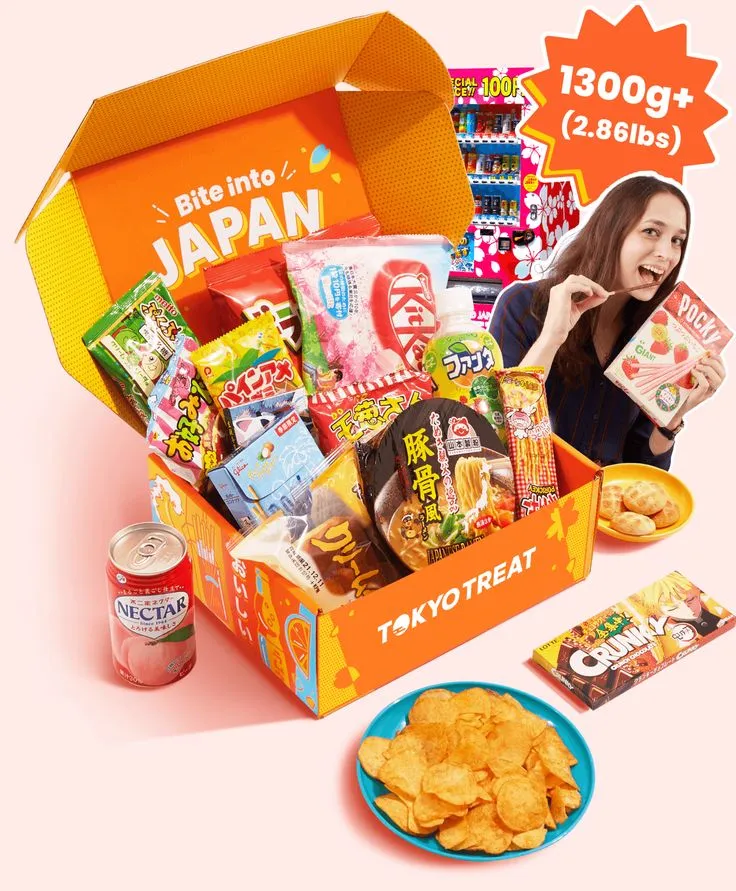
Something has shifted in the US market over the last several years, and Japanese candy is a big part of why. As American consumers have been exposed to more complex textures through the explosion of Japanese snack imports, subscription boxes, and specialty retailers, expectations have quietly changed.
You can see it in the numbers. Hi-Chew has gone from a niche import to a product stocked at Costco, Target, and most major grocery chains. Pocky has become a mainstream party snack. And newer Japanese imports like Mochi ice cream — which delivers that signature chewy-soft-cold texture contrast that is genuinely unlike anything in traditional American dessert culture — have exploded in popularity.
US food companies are starting to take notice. Several major American snack brands have begun experimenting with layered texture profiles in new product lines, though most food industry observers would say they're still years behind their Japanese counterparts in terms of technical sophistication.
Texture Is the New Flavor
Here's the thing about texture that makes it such a powerful tool: it operates below the level of conscious awareness. Most people don't walk away from a piece of Hi-Chew thinking, "wow, that progressive chew resistance was extraordinary." They just know it felt really good to eat. That's the whole point.
Flavor is something you can describe and compare. Texture is something you experience. And in a snack market increasingly crowded with bold flavors competing for attention, the brands that can deliver a genuinely distinctive physical experience have a significant edge.
Japanese candy makers figured this out a long time ago. The rest of the world is only now catching up — one satisfying chew at a time.