Slurpees to Sakura Mochi: How Japanese Convenience Stores Became America's Snack Obsession
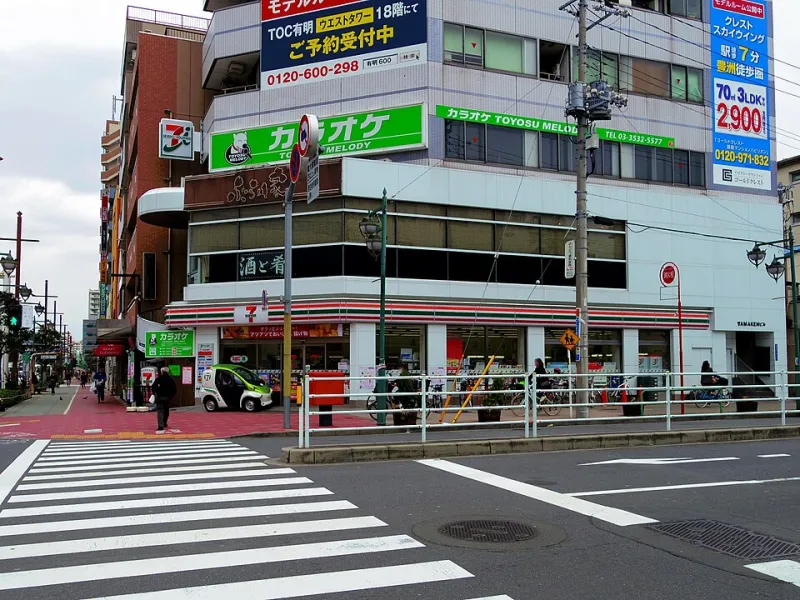
Photo: LERK, CC BY-SA 3.0, via Wikimedia Commons
In America, a convenience store is where you stop when you've run out of options. In Japan, it's a destination.
That gap in expectation is exactly what's turned Japan's konbini — the shorthand locals use for convenience stores — into one of the most talked-about food phenomena among American snack enthusiasts. And at the center of that phenomenon, somewhat improbably, is 7-Eleven.
Yes, that 7-Eleven. The one next to the gas station with the roller hot dogs.
Except in Japan, it's something else entirely.
What Makes Japanese 7-Eleven Different
Seven & i Holdings, the Japanese parent company that now actually owns the 7-Eleven brand globally, operates roughly 21,000 locations across Japan. These stores are not the sad, fluorescent-lit snack graveyards of American strip malls. They're immaculately maintained, obsessively curated retail environments where the food — especially the sweets — is taken extremely seriously.
Japanese 7-Elevens stock a rotating selection of seasonal onigiri, premium sandwiches, and fresh pastries. But for American candy hunters, the real draw is the snack and confectionery section: shelves stocked with exclusive products you simply cannot find anywhere else, rotating with the seasons and occasionally tied to pop culture collaborations that sell out within days.
Sakura-flavored everything in spring. Chestnut and sweet potato in fall. Christmas-themed chocolate assortments that make American holiday candy look like an afterthought. The konbini calendar moves fast, and that scarcity is a huge part of the appeal.
"It Changed How I Think About Snacking"
Marcus T., a 34-year-old graphic designer from Portland who asked us to use only his first name and initial, discovered Japanese convenience store culture during a trip to Tokyo three years ago. He's been chasing that experience ever since.
"I walked into a 7-Eleven in Shinjuku at like 11pm, jet-lagged and hungry, and I genuinely thought I'd walked into the wrong store," he told us. "The packaging was beautiful, everything looked fresh, and there were entire sections of candy I'd never seen in any import shop back home. I spent forty minutes in there. I bought way too much. I have no regrets."
Since returning to the US, Marcus has become part of an online community dedicated to tracking and importing Japanese konbini exclusives — a surprisingly large and active subculture that trades tips on which import sites restock fastest and which seasonal releases are worth paying premium shipping for.
"The thing people don't get," he said, "is that it's not just about the candy itself. It's about the whole system. The way things rotate. The way the store feels. You're buying into a culture, not just a product."
The Exclusives That Drive the Demand
So what exactly are American snack fans hunting? A few categories consistently generate the most excitement.
Seasonal limited editions are the biggest driver. Japanese convenience stores cycle their snack offerings with the agricultural calendar in a way American retail simply doesn't. A matcha KitKat that's only available for six weeks in spring carries a completely different cultural weight than a year-round product — and American collectors have fully absorbed that logic.
Collaboration products — candy tied to anime properties, Studio Ghibli characters, or regional tourism campaigns — generate intense short-term demand. These items sell out in Japan and immediately spike in price on import sites and resale platforms.
Store-brand innovations are perhaps the most underrated category. 7-Eleven Japan's private label snack line includes items that genuinely rival branded products in quality and creativity. Their premium chocolate-covered potato chips, seasonal mochi ice cream bars, and various wagashi-inspired sweets have developed dedicated US followings entirely through word of mouth and social media.
Why Import Sites Can't Fully Replicate the Experience
Here's the tension at the heart of this whole phenomenon: the things that make Japanese convenience store snacks so compelling are the same things that make them hard to access from the US.
Seasonality means timing is everything, and by the time a limited product shows up on an import site, it may already be sold out or past its peak freshness window. The konbini experience is also deeply spatial — part of what makes those stores magical is the density of options, the careful merchandising, the sense of a living, breathing food culture you're dipping into.
Some import retailers and subscription box services have tried to approximate this — and the best of them do a genuinely good job of curating and rotating stock. But most American fans will tell you, somewhat wistfully, that the real thing requires a plane ticket.
That gap has actually become a marketing asset for Japan's tourism industry. Food tourism focused on konbini culture is now a recognized phenomenon, with travel blogs and YouTube channels dedicated entirely to convenience store hauls from Tokyo, Osaka, and beyond.
Reshaping American Snack Expectations
The deeper impact of Japan's convenience store influence on American snack culture might be harder to quantify but easier to feel. A generation of food-curious Americans who've encountered Japanese konbini culture — either in person or through online communities — are coming home with fundamentally different expectations.
They want rotation. They want seasonality. They want packaging that communicates care. They want snacks that feel like they were made by people who take snacks seriously.
Some American retailers are starting to respond. The growth of Japanese and Asian snack sections in mainstream grocery chains, the explosion of Asian snack subscription boxes, and the increasing visibility of import candy shops in major US cities all point to a market that's been reshaped by the konbini ideal.
And 7-Eleven USA, for its part, has taken note of its Japanese cousin's reputation. The chain has been gradually experimenting with elevated food offerings in select markets — though it has a long way to go before any American location inspires a 40-minute midnight browsing session.
The Gateway That Keeps Giving
What's most striking about the Japanese convenience store's role in American snack culture is how organic it's been. Nobody ran a campaign to make konbini culture cool in the US. Travelers came home with stories and snacks, shared them online, and built communities around the discovery.
That authenticity is exactly what keeps the enthusiasm alive. In a snack landscape full of manufactured hype and influencer deals, Japanese convenience store culture feels like a genuine secret — one that rewards the curious and the adventurous.
Which is, when you think about it, exactly what Candy Tokyo is all about.